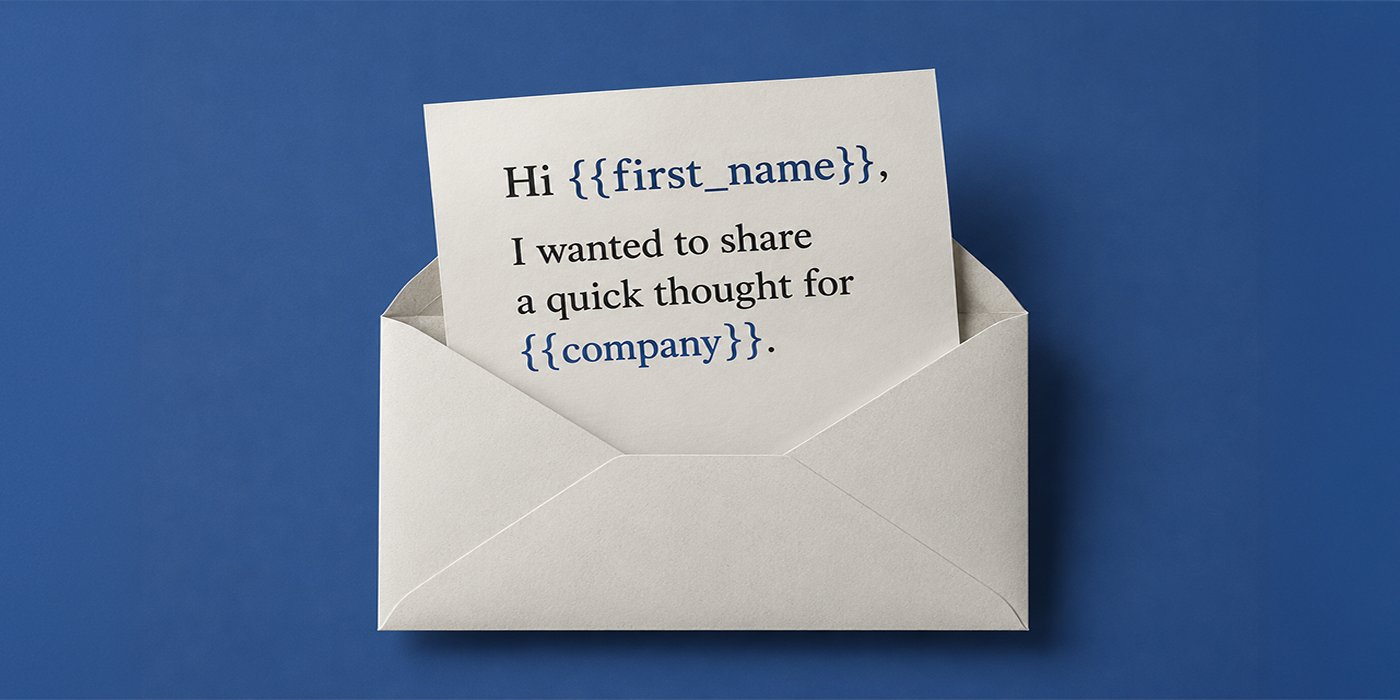
Most Businesses Don’t Have Customer Journeys. They Have Complicated Email Blasts.


Does your business have a customer journey or are you just sending emails? The answer lies in how you measure success. Do you focus on the number of emails or do your emails really follow customers along their lifecycle.
Most businesses send email. It’s familiar, relatively inexpensive, and easy to activate when something needs attention. Promotions, announcements, newsletters, reminders—email becomes the default response whenever marketing needs to “do something.”
The issue isn’t that email is being used. It’s that it’s often used in isolation.
In many organizations, email exists as a series of one-off sends, each tied to a moment or a campaign, rather than as part of a connected system that reflects how customers actually move toward a decision. The result is activity without continuity. Messages go out, metrics are reviewed, and the next send starts fresh, disconnected from what came before.
That’s what most people mean when they say they “do email marketing.” But it’s not a customer journey.
Why are customer journeys important?
A customer journey shifts the focus from what the business wants to say to what the customer is experiencing. Instead of asking, What should we send this week? the question becomes, What would be most helpful right now based on what this person has already done—or hasn’t done?
When journeys are in place, email stops functioning as a megaphone and starts functioning as infrastructure. Messages are triggered by behavior, timed around moments of hesitation or momentum, and designed to reinforce value gradually. The experience feels calmer. Less repetitive. More intentional. And because it’s responsive rather than reactive, it tends to convert better without requiring higher volume.
The impact shows up quietly. Conversion rates improve without dramatic creative changes. Retention increases because customers feel understood instead of sold to. Reactivation happens because the system remembers context, even when people don’t. Over time, growth becomes steadier, not because more messages are sent, but because fewer messages are wasted.
You can usually tell which side of this line a business is on with a simple question:
How many emails do you send versus how well do you track the life of a customer?
If email performance depends on constant planning meetings, calendar pressure, and repeated reinvention, it’s likely campaign-driven. If performance holds even when attention shifts elsewhere, a system is probably doing the work. Journeys create leverage. Campaigns require effort.
How to start moving towards customer journeys.
Taking the first steps doesn’t require rebuilding everything. It starts by identifying one meaningful point of progress—something that clearly indicates intent—and mapping what someone needs before and after that moment. From there, a small sequence can be built to support that transition. Not to persuade aggressively, but to reduce uncertainty, answer real questions, and reinforce legitimacy.
This is where many teams stall. Not because the tools aren’t available, but because journeys require coordination across marketing, sales, and customer experience. Signals need to be defined. Language needs to reflect what customers actually say. And learning has to be carried forward instead of living in individual inboxes or reports.
An agency can help here, not by sending more email, but by helping design the system behind it. By turning scattered insights into usable triggers. By ensuring journeys reflect real behavior, not assumptions. And by making sure each sequence contributes to a broader understanding of what actually moves customers forward.
Email isn’t the problem. And frequency isn’t the solution.
The difference is whether communication is episodic or connected. Whether it resets every time or quietly compounds in the background.
That’s the difference between sending emails and building journeys.

Daniel Benavides
PartnerDaniel is a partner at Column 13 and a growth strategist who makes complex businesses easier to understand, trust, and buy from.
Read moreShow less
He has led high-stakes rebrands, product launches, go-to-market programs, demand generation, and sales enablement across aviation, emerging technology, associations, and professional services. His range is unusual. He can find the sharpest market position, turn it into a compelling creative system, align the people responsible for selling and delivering it, and build the operating discipline that makes the work scale.
Before Column 13, Daniel led marketing and brand strategy at AUVSI and served as senior creative director at Elva Marketing. He writes here about growth as a craft: what compounds, what burns out, and the disciplined work between them that separates momentum from noise.